How to Build a Complete Gym with a Limited Equipment Budget
November 28, 2026
Opening a commercial gym requires a significant investment, and fitness equipment is often one of the largest startup expenses. For new gym owners and investors, purchasing too many machines at the beginning can put unnecessary pressure on the budget. However, choosing equipment based on price alone may result in an incomplete training environment and limit the gym's ability to attract different types of members.
The key is to build a gym around essential training needs, select versatile equipment, and make purchasing decisions based on long-term value rather than the lowest initial cost.
Whether you are opening a small commercial gym, a hotel fitness center, or a community training facility, the following strategies can help you create a complete and practical gym with a limited equipment budget.
1. Identify Essential Training Areas Before Buying Equipment
Before requesting quotations or selecting machines, determine which training areas your gym needs. A complete commercial gym does not necessarily require dozens of machines in every category. It needs a balanced equipment configuration that supports the most common workout routines.
For a general-purpose gym, prioritize these five areas:
- Cardio training: Treadmills, exercise bikes, and elliptical trainers for warm-ups and cardiovascular workouts.
- Strength training: Selectorized machines covering major muscle groups.
- Free weight training: Dumbbells, barbells, weight plates, and benches.
- Functional training: Cable machines, kettlebells, resistance bands, and other versatile accessories.
- Stretching and recovery: Exercise mats, foam rollers, and mobility equipment.
Defining these areas first helps prevent unnecessary purchases and ensures that your initial investment covers the essential training needs of your target members.
2. Prioritize Equipment That Covers Multiple Training Needs
When working with a limited budget, versatility should be one of your main purchasing considerations.
Instead of buying several machines that perform similar exercises, focus on equipment that supports multiple movements or training purposes.
Consider the following options:
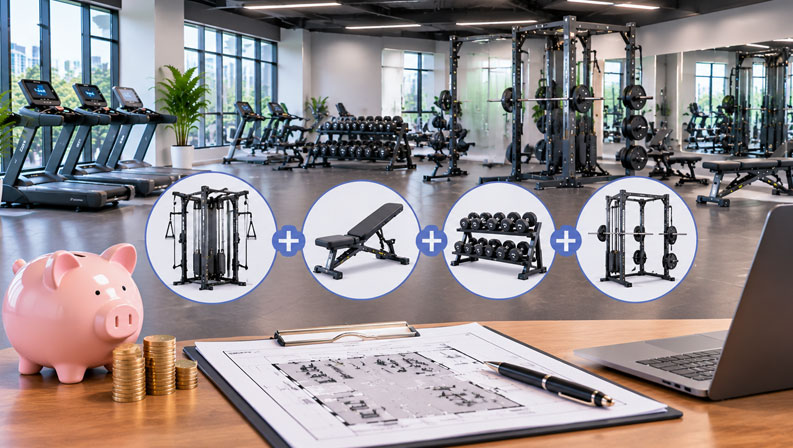
- Functional trainers: Support cable-based exercises for different muscle groups and training styles.
- Adjustable benches: Can be used for flat, incline, and decline exercises when compatible with the selected model.
- Power racks: Support squats, bench presses, pull-ups, and other compound movements with appropriate attachments.
- Smith machines: Offer guided barbell movements for a variety of strength exercises.
- Adjustable dumbbells: Provide multiple weight options while reducing storage requirements.
Multi-functional equipment can help reduce the number of machines required without sacrificing too much training variety. However, make sure that the equipment is suitable for commercial use and can withstand frequent daily operation.
3. Invest in Core Equipment Before Expanding the Gym
A common mistake among new gym owners is purchasing too many specialized machines before securing the essential equipment.
Start with equipment that covers the most frequently trained muscle groups and common workout routines.
A practical initial purchasing list may include:
| Equipment Category | Essential Equipment |
| Cardio | Commercial treadmills, exercise bikes, elliptical trainers |
| Chest Training | Chest press machine, adjustable benches |
| Back Training | Lat pulldown, seated row, functional trainer |
| Leg Training | Leg press, leg extension, leg curl |
| Shoulder Training | Shoulder press machine, dumbbells |
| Free Weights | Dumbbell sets, barbells, weight plates |
| Strength Stations | Power racks, Smith machine |
| Functional Training | Kettlebells, resistance bands, exercise mats |
The exact quantities should depend on your available floor space, expected membership, and budget. For example, a smaller gym may begin with fewer cardio machines and add more equipment after evaluating actual member usage.
4. Choose Commercial-Grade Equipment for Long-Term Value
Buying inexpensive equipment may reduce initial costs, but it can create higher expenses if machines require frequent repairs or replacement.
Commercial gyms typically experience heavier usage than home fitness environments. Equipment should therefore be selected based on durability, structural stability, user safety, and ease of maintenance.
When comparing equipment, pay attention to:
- Frame construction and material quality
- Welding and surface finishing
- Cable, pulley, and bearing performance
- Upholstery and padding durability
- Smooth operation and user comfort
- Warranty coverage and spare parts availability
You do not need to purchase the most expensive equipment in every category. Instead, choose reliable commercial-grade products that match your expected usage and operating requirements.
A slightly higher initial investment in essential equipment may provide better long-term value through reduced maintenance and more consistent operation.
5. Optimize Gym Space to Reduce Purchasing Costs
A well-planned layout can help you build a functional gym without filling every available square meter with equipment.
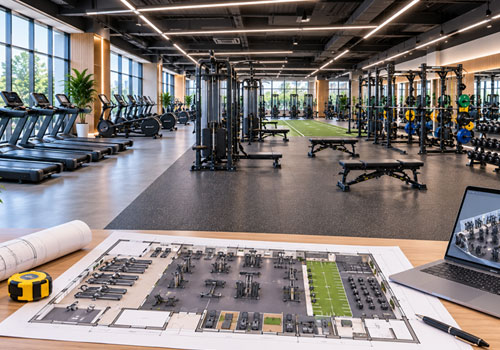
Before purchasing, measure the facility and prepare a basic equipment layout. Consider machine dimensions, operating clearances, access routes, and the space required for different exercises.
Several practical approaches can help control costs:
- Use multi-functional training stations. Cable systems and functional trainers can support different exercises while occupying less space than several individual machines.
- Combine free weights with strength machines. A carefully selected range of dumbbells, benches, and racks can provide additional workout options without requiring a large number of specialized machines.
- Avoid duplicate equipment. Review the functions of each machine and remove unnecessary overlap from the purchasing list.
- Plan storage areas. Proper storage for dumbbells, weight plates, and accessories keeps the gym organized and makes better use of available space.
An efficient layout also helps improve member movement and reduces congestion during busy hours.
6. Consider a Phased Equipment Purchasing Plan
You do not need to purchase every piece of equipment before opening your gym. A phased purchasing strategy can help distribute investment over time while allowing the business to respond to actual demand.
A practical approach may include three stages:
Stage 1: Essential Equipment for Opening
Purchase the core cardio machines, major strength machines, free weights, benches, and basic functional training equipment. The goal is to provide a complete range of essential workout options from the first day.
Stage 2: Equipment Expansion
After observing membership growth and equipment usage, add machines that are frequently requested or experience high demand. This may include additional treadmills, leg machines, cable stations, or specialized strength equipment.
Stage 3: Facility Upgrades
Once the gym has established stable operations, consider expanding functional training areas, adding premium equipment, or introducing specialized training zones.
This approach allows gym owners to manage cash flow more effectively and make purchasing decisions based on real operating data.
7. Work with a Manufacturer That Offers Complete Gym Solutions
Buying equipment from multiple suppliers can increase communication costs, create inconsistent product configurations, and make delivery coordination more complicated.
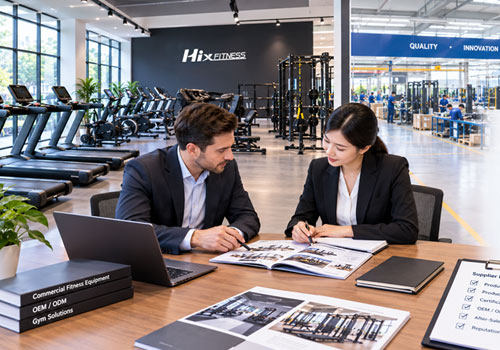
Working with an experienced commercial fitness equipment manufacturer can simplify the purchasing process. A manufacturer with a broad product range may help you select compatible equipment, coordinate bulk orders, and plan the overall gym layout.
Hix Fitness provides commercial fitness equipment for overseas distributors, gym owners, and institutional projects. Its product range includes cardio machines, strength training equipment, free weights, racks, and functional training products.
Hix Fitness also offers OEM/ODM customization and complete gym solutions, including equipment selection recommendations, space planning, and 2D/3D layout drawings.
Whether you are opening your first gym or expanding an existing facility, a well-planned equipment package can help you control investment costs while creating a practical and professional training environment.
Contact Hix Fitness to discuss your gym project, request a commercial equipment quotation, or receive a customized equipment plan based on your available budget and floor space.
Frequently Asked Questions
1. Can I build a complete commercial gym with a limited budget?
Yes. Focus on essential training areas, choose versatile commercial-grade equipment, and avoid unnecessary duplication. You can also expand the equipment inventory gradually as membership and revenue grow.
2. Which gym equipment should I purchase first?
Start with essential cardio machines, major strength training equipment, dumbbells, barbells, benches, and basic functional training accessories. The exact selection should reflect your target members and available space.
3. Is multi-functional gym equipment a good investment?
Yes. Multi-functional equipment, such as cable systems, functional trainers, and adjustable benches, can support different exercises while reducing space requirements. Make sure the products are designed for commercial use.
4. How can I reduce the cost of purchasing commercial gym equipment?
Compare complete equipment quotations, prioritize essential products, consider bulk purchasing, select versatile machines, and work with a manufacturer that can provide multiple equipment categories and gym planning services.