Commercial Gym Equipment for Fire Departments & Emergency Response Training Centers
July 20, 2026
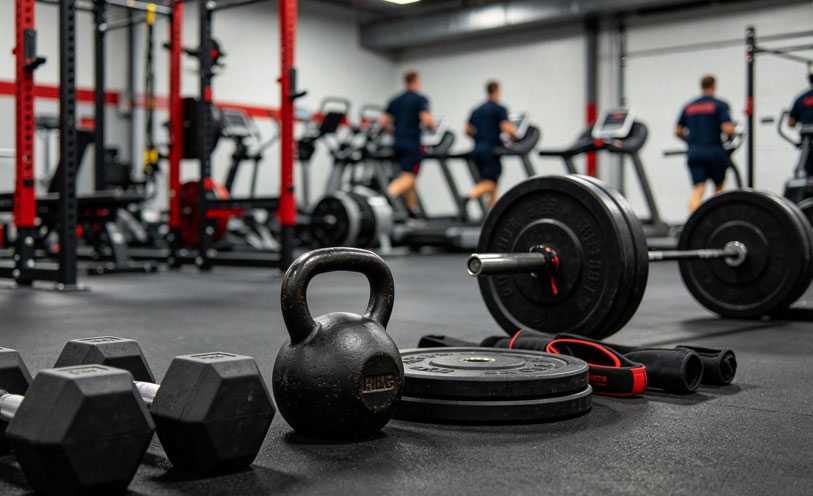
Firefighters and emergency response personnel face some of the most physically demanding jobs in the world. Every emergency call can require carrying heavy equipment, climbing multiple flights of stairs, dragging hoses, lifting victims, breaking through obstacles, and operating in extreme environmental conditions. These tasks demand exceptional strength, cardiovascular endurance, mobility, balance, and mental resilience.
Unlike traditional commercial fitness centers that focus on general health or aesthetics, fire department gyms are designed to prepare personnel for real-life emergency situations. Every piece of equipment should contribute to improving operational performance, reducing injury risks, and maintaining long-term physical readiness.
For this reason, selecting the right commercial gym equipment is a critical investment for fire departments, emergency response training centers, rescue organizations, and public safety academies.
1. Understanding the Physical Demands of Firefighters
Before selecting equipment, it is important to understand how firefighters train.
A firefighter's daily responsibilities often include:
- Carrying heavy breathing apparatus
- Climbing ladders while wearing protective gear
- Pulling charged fire hoses
- Lifting and carrying injured individuals
- Breaking doors and barriers
- Operating heavy rescue tools
- Working for extended periods under high temperatures
- Performing physically demanding tasks with limited recovery time
Unlike athletes who train for a single event, firefighters must be prepared for unpredictable situations every day. Their fitness programs therefore focus on practical performance rather than appearance.
2. Training Goals for Fire Department Fitness Centers
A professional fire department gym should support several key training objectives.
Maximum Strength
Strength enables firefighters to lift, carry, push, and pull heavy loads safely.
Recommended equipment includes:
- Power racks
- Half racks
- Olympic barbells
- Adjustable benches
- Plate-loaded strength machines
- Deadlift platforms
Compound exercises such as squats, deadlifts, overhead presses, and bench presses develop the total-body strength required for emergency operations.
Cardiovascular Endurance
Emergency incidents often require sustained physical effort over long periods.
Recommended cardio equipment includes:
- Commercial treadmills
- Air bikes
- Rowing machines
- Stair climbers
- Ski trainers
High-intensity interval training (HIIT) is commonly used to simulate the rapid changes in physical intensity experienced during emergency responses.
Functional Strength
Firefighters rarely move in fixed patterns.
Functional training improves movements that closely resemble real-world rescue tasks.
Recommended equipment includes:
- Functional training rigs
- Suspension trainers
- Kettlebells
- Sandbags
- Battle ropes
- Medicine balls
- Plyometric boxes
- Resistance bands
These tools help improve coordination, balance, stability, grip strength, and explosive power.
3. Essential Strength Equipment
Strength equipment forms the foundation of every fire department training facility.
A complete strength area should include machines for all major muscle groups.
Upper Body
Recommended equipment:
- Chest press
- Shoulder press
- Lat pulldown
- Seated row
- Functional cable crossover
Strong upper-body muscles are essential for lifting equipment, forcing entry, and rescue operations.
Lower Body
Recommended equipment:
- Leg press
- Hack squat
- Leg extension
- Leg curl
- Glute machine
- Standing calf raise
Powerful legs improve climbing ability, lifting performance, and overall endurance.
Multi-Function Equipment
Space efficiency is especially important for many municipal fire stations.
Recommended multi-function equipment includes:
- Smith machine with functional trainer
- Power rack with cable crossover
- Multi-station strength systems
- Adjustable benches
These systems maximize training options while minimizing floor space.
4. Free Weight Training Area
Free-weight exercises develop coordination, stabilization, and real-world strength more effectively than machines alone.
A recommended free-weight section should include:
- Rubber dumbbells from 2.5 kg to 50 kg or more
- Olympic barbells
- EZ curl bars
- Weight plates
- Flat benches
- Adjustable benches
- Storage racks
- Deadlift platform
Commercial rubber flooring should be installed to protect both equipment and the facility.
5. Functional Training Zone
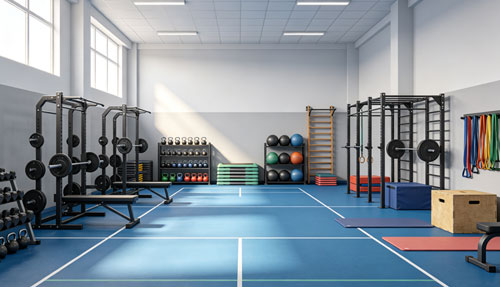
A dedicated functional training area prepares firefighters for the unpredictable movements required during rescue operations.
Recommended equipment includes:
- Battle ropes
- Sled push and pull systems
- Sandbags
- TRX suspension trainers
- Agility ladders
- Plyometric boxes
- Medicine balls
- Heavy ropes
- Farmers carry handles
Training programs may combine multiple exercises into circuits that improve endurance, coordination, and decision-making under physical fatigue.
6. Cardio Equipment Selection
Cardiovascular endurance is essential for firefighters who may perform physically demanding work continuously for extended periods.
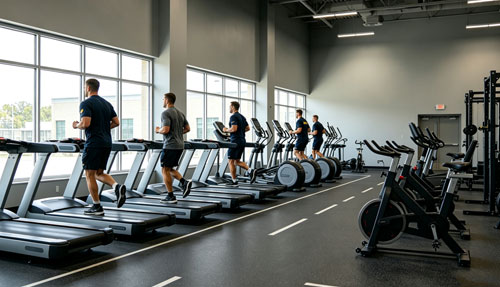
A balanced cardio zone should include:
- Commercial treadmills
- Air bikes
- Stair climbers
- Rowing machines
- SkiErg trainers
Stair climbers are particularly valuable because they closely simulate climbing stairs while carrying equipment inside multi-story buildings.
7. Equipment Durability Requirements
Fire department fitness facilities often operate every day, with multiple shifts using the equipment.
Commercial equipment should therefore feature:
- Heavy-duty steel construction
- Precision robotic welding
- Commercial-grade bearings
- High-strength cables
- Wear-resistant upholstery
- Scratch-resistant powder coating
- Corrosion-resistant components
Durable equipment reduces downtime and lowers long-term maintenance costs.
8. Safety Considerations
Safety should always remain the highest priority.
Important safety features include:
- Stable equipment frames
- Anti-slip foot platforms
- Clearly marked adjustment points
- Rounded corners
- Emergency safety stops
- Ergonomic seat positioning
Adequate spacing between equipment also helps prevent accidents during high-volume training sessions.
9. Facility Layout Recommendations
A typical fire department fitness center may include:
- Warm-up and mobility area
- Cardio training zone
- Strength machine area
- Free-weight section
- Functional training zone
- Stretching and recovery area
- Equipment storage
Proper zoning improves training efficiency while reducing congestion.
10. Choosing the Right Commercial Gym Equipment Manufacturer
Selecting the right supplier is just as important as choosing the equipment itself.
Look for manufacturers that offer:
- Commercial-grade equipment
- OEM & ODM manufacturing
- Customized colors and logos
- 2D and 3D gym layout design
- Professional installation guidance
- International quality certifications
- Spare parts availability
- Long-term after-sales support
Working directly with an experienced commercial gym equipment manufacturer can reduce procurement costs while ensuring equipment quality and project efficiency.
Conclusion
Fire departments and emergency response organizations require commercial gym equipment capable of supporting demanding daily training while delivering exceptional durability, safety, and long-term reliability.
By combining strength equipment, cardiovascular machines, free weights, and functional training systems, organizations can build comprehensive fitness facilities that improve operational readiness, reduce injury risks, and enhance overall performance.
Partnering with an experienced commercial gym equipment manufacturer ensures that every project benefits from professional planning, high-quality products, and dependable after-sales service.
FAQ
1. What equipment is essential for a fire department gym?
Power racks, treadmills, stair climbers, rowing machines, functional training rigs, free weights, and plate-loaded strength equipment form the foundation of most fire department fitness facilities.
2. Why is functional training important for firefighters?
Functional exercises improve balance, coordination, grip strength, endurance, and movement patterns that closely match real emergency situations.
3. Should fire department gyms use commercial-grade equipment?
Yes. Commercial equipment is designed for continuous daily use, providing superior durability, safety, and lower maintenance costs than residential equipment.
4. Can a commercial gym equipment manufacturer provide complete project solutions?
Yes. Many manufacturers offer equipment selection, gym layout planning, 2D and 3D design, customization services, installation guidance, and comprehensive after-sales support.