Commercial Gym Equipment for Government & Public Safety Training Facilities
July 14, 2026
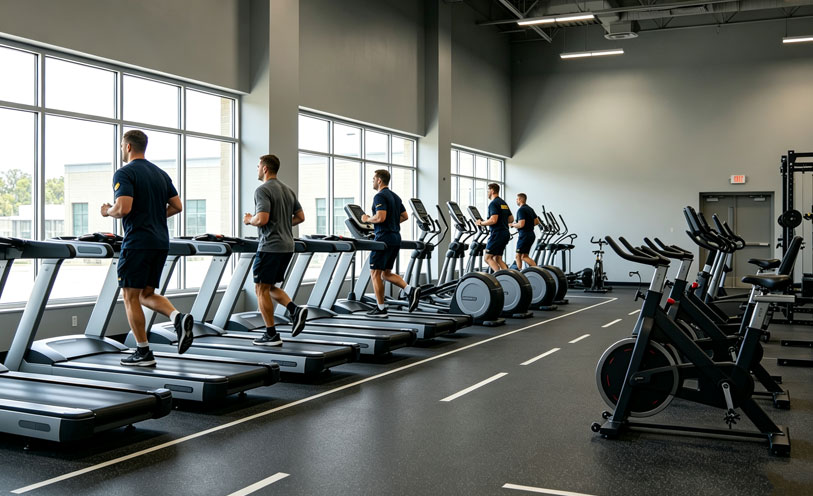
Government agencies and public safety organizations rely on physical fitness to ensure their personnel are prepared for demanding daily responsibilities. Whether training police officers, firefighters, correctional officers, emergency response teams, or other public service personnel, fitness facilities must support strength, endurance, mobility, and functional performance while withstanding years of intensive use.
Unlike traditional commercial gyms, government and public safety training facilities are designed to improve operational readiness rather than simply promote general fitness. Equipment must be durable, safe, easy to maintain, and capable of supporting multiple users throughout the day.
This guide explains how to choose commercial gym equipment for government and public safety training facilities, the key equipment categories to include, and the factors that should be considered when planning a long-lasting fitness center.
1. Why Government & Public Safety Facilities Require Commercial-Grade Equipment
Personnel working in government and public safety roles face physically demanding tasks every day. They may need to carry heavy equipment, climb stairs, respond quickly during emergencies, or maintain physical performance over long shifts.
Because of these requirements, training facilities must provide equipment that supports:
- Maximum strength development
- Cardiovascular endurance
- Functional movement
- Speed and agility
- Core stability
- Injury prevention
- Long-term physical conditioning
Unlike home fitness equipment, commercial-grade machines are designed to operate for many hours each day while maintaining consistent performance and safety.
2. Understand the Training Objectives
Before selecting equipment, it is important to define the primary training goals of the facility.
Typical objectives include:
Strength Development
Personnel require sufficient muscular strength for lifting, carrying, pushing, pulling, and other physically demanding tasks.
Recommended equipment includes:
- Power racks
- Half racks
- Olympic barbells
- Plate-loaded machines
-
Adjustable benches
Cardiovascular Endurance
Good cardiovascular fitness improves work capacity and recovery during physically demanding situations.
Recommended equipment includes:
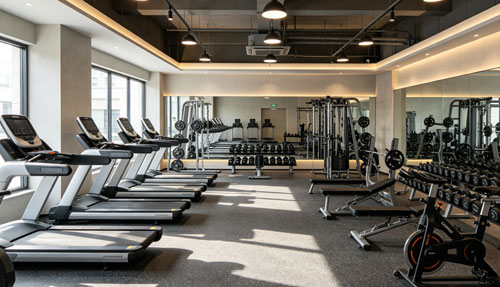
- Commercial treadmills
- Air bikes
- Rowing machines
- Elliptical trainers
- Stair climbers
These machines support both steady-state cardio and high-intensity interval training (HIIT).
Functional Fitness
Real-world performance often depends on full-body movement rather than isolated muscle strength.
Functional training equipment may include:
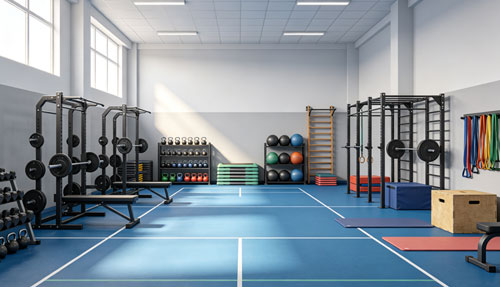
- Functional training rigs
- Suspension training systems
- Kettlebells
- Medicine balls
- Battle ropes
- Plyometric boxes
- Resistance bands
Functional exercises improve coordination, balance, mobility, and explosive power.
3. Build a Complete Strength Training Area
Strength training is the foundation of most government fitness facilities.
A complete strength zone should include equipment for every major muscle group while allowing multiple users to train simultaneously.
Recommended equipment includes:
Upper Body
- Chest press machine
- Shoulder press machine
- Lat pulldown machine
- Seated row machine
- Functional cable trainer
Lower Body
- Leg press
- Hack squat
- Leg extension
- Leg curl
- Glute training equipment
Compound Training Equipment
- Power rack
- Smith machine
- Half rack
- Deadlift platform
- Adjustable benches
Combining selectorized and plate-loaded equipment allows facilities to serve users with different training experience and fitness levels.
4. Design a High-Performance Free Weight Area
Free-weight training plays an essential role in improving overall athletic performance.
A recommended free-weight area should include:
- Rubber dumbbells from 2.5 kg to 50 kg (or higher)
- Olympic barbells
- EZ curl bars
- Adjustable benches
- Flat benches
- Weight plate storage racks
- Bumper plates
- Lifting platforms
Heavy-duty commercial flooring should be installed to absorb impact and protect both equipment and building structures.
5. Create a Functional Training Zone
Functional training has become one of the most important components of public safety fitness programs.
Unlike traditional resistance training, functional exercises emphasize movement patterns commonly used during real-world tasks.
Recommended equipment includes:
- Multi-station functional training rigs
- Battle ropes
- TRX suspension trainers
- Kettlebells
- Sandbags
- Plyometric boxes
- Medicine balls
- Agility ladders
- Sled push and pull systems
These exercises improve balance, coordination, endurance, agility, and total-body strength.
6. Prioritize Equipment Durability
Government training facilities often operate from early morning until late evening, with equipment being used continuously by multiple groups.
For this reason, equipment should feature:
- Heavy-duty steel frames
- Precision welding
- Commercial-grade bearings
- High-quality cables and pulleys
- Scratch-resistant powder coating
- Corrosion-resistant finishes
Durable equipment reduces maintenance costs and extends service life.
7. Focus on Safety
Safety should always be a top priority.
Important safety features include:
- Stable equipment frames
- Anti-slip foot platforms
- Rounded edges
- Adjustable safety stops
- Clearly marked adjustment points
- Ergonomic seat designs
Facilities should also maintain sufficient spacing between machines to reduce the risk of accidents.
8. Plan an Efficient Facility Layout
A well-designed layout improves both training efficiency and user safety.
A typical government training facility may include:
- Reception and storage area
- Cardio zone
- Strength machine zone
- Free weight zone
- Functional training zone
- Stretching and recovery area
Equipment should be arranged to allow smooth movement between training areas while avoiding congestion during peak usage.
9. Consider Future Expansion
Training requirements often evolve over time.
When planning a new facility, leave enough space for future additions such as:
- Extra treadmills
- Additional power racks
- Recovery equipment
- Functional training stations
- Mobility and rehabilitation areas
Flexible planning reduces future renovation costs.
10. Choose an Experienced Commercial Gym Equipment Manufacturer
A professional manufacturer can provide much more than equipment.
Look for suppliers that offer:
- Commercial-grade products
- OEM & ODM services
- Custom colors and branding
- 2D and 3D gym layout design
- Installation guidance
- Quality certifications
- Spare parts support
- Long-term after-sales service
Working directly with an experienced manufacturer helps ensure product quality, project efficiency, and long-term operational success.
Conclusion
Government and public safety training facilities require commercial gym equipment that is durable, safe, and designed for intensive daily use.
By carefully selecting cardio equipment, strength machines, free weights, and functional training systems, facility managers can create an environment that supports physical readiness, improves performance, and protects long-term investment.
Partnering with a reliable commercial gym equipment manufacturer also ensures professional planning, efficient project execution, and dependable after-sales support.
FAQ
1. What type of equipment is most important for government training facilities?
Strength equipment, cardio machines, free weights, and functional training equipment are all essential for building a complete training environment.
2. Why is commercial-grade equipment recommended instead of home-use equipment?
Commercial equipment is designed for continuous daily use, offering greater durability, safety, and lower long-term maintenance costs.
3. Should functional training be included in government fitness facilities?
Yes. Functional training improves balance, coordination, agility, endurance, and real-world physical performance.
4. Can commercial gym equipment manufacturers provide complete facility design services?
Yes. Many manufacturers offer equipment recommendations, 2D and 3D layout design, project planning, and customized solutions.